Contents
SEO Techniques to Boost Organic Traffic
Hitting the first page of Google is no longer the sole objective of businesses. With the rise of AI chatbots, SEO is now as much about getting organic mentions from these chatbots as it is about topping search rankings for specific keywords. This guide will help you refine your SEO techniques, describing actionable strategies to boost your organic traffic.
Core SEO techniques to boost organic traffic and improve rankings
Keyword research and intent optimisation
It starts with researching the right keywords that will attract readers to your site. You’ll create content that revolves around these keywords, drawing traffic from search queries or chatbot recommendations.
The right keywords depend on your content niche and desired audience. For example, a sports blog targeting U.S.-based readers will need keywords related to “NFL,” “football,” “basketball,” and “baseball,” as these represent the most popular sports in the U.S. In contrast, the same blog targeting U.K.-based readers needs keywords related to “soccer,” “tennis,” and “rugby,” as these are more popular in the U.K.
Use schema markup code to define entities on your website. Entities help Google understand content on your site, such as the difference between “football” for a U.S.-based audience (the NFL) and “football” for a U.K.-based audience (soccer).
Keyword research may seem hectic, but it has been made easier by AI-based systems. SEO tools like Semrush and Ahrefs can automatically recommend keywords based on your audience criteria. You don’t have to spend much time thinking about keywords when these tools can deliver them within seconds.
Identifying primary, secondary, and long-tail keywords
Keywords are divided into:
- Primary. The main, high-volume words that attract readers. Website pages are optimised more for primary keywords than other categories.
- Secondary. Related keywords that support the primary keywords. These have lower search volumes than primary keywords, but they add context and depth to web pages.
- Long-tail. These are phrases, often of more than 3 words, that reflect specific search intent.
Suppose your primary keyword is “fashion boots.” The secondary keywords can be “top fashion boots for men,” “the best fashion boots for women,” and “fashion boots stores in NYC.” These secondary keywords provide context for the primary keyword.
Long-tail keywords can be “the best fashion boots for wide feet,” or “black-colored boots for a casual outing.” These long-tail keywords are highly specific. They don’t have the highest search volumes, but creating content that matches long-tail keywords attracts deeply engaged readers.
You can use Semrush, Ahrefs, and other SEO tools to identify primary, secondary, and long-tail keywords. These tools analyse vast data to suggest the most effective keywords for your site.
Competitor analysis and identifying content gaps
Analysing competitors is a key SEO tactic. You’ll learn what SEO strategies work by analysing the competitors dominating the search engine and large language model (LLM) chatbot rankings.
After identifying your top competitors, you might be thinking of checking each website manually to note their successful SEO techniques, but that’ll be strenuous. Instead, SEO tools like Semrush can analyse competitors’ websites and extract key insights for you. What are their primary, secondary, and long-tail keywords? What are their backlink volumes? How is their site speed and mobile-friendliness compared to yours? SEO tools answer these questions.
Creating high-quality, intent-driven content
After identifying the right keywords and analysing your competitors’ strategies, it’s time to apply the insights to create high-quality content.
- Content revolves around quality, not volume. What matters is providing information that answers your users’ queries in detail. For example, a guide about “the best fashion boots for women” should mention what makes boots a good fashion choice, the ideal occasions to wear them, list multiple fashion boots, and identify what makes each worthy of being considered the best.
- Good content revolves around answering user intent. Any user whose search query leads them to your website should have their curiosity satisfied after scrolling through your content.
AI can provide assistance when creating content, like suggesting outlines and ideas, but you’ll do most of the work involved in this SEO technique.

On-page SEO optimisation for better rankings and PR
On-page optimisation involves tweaking individual web pages to get higher search engine and AI visibility. Dear SEO pros, you can skip it, but if you want to remind yourself of the basics, here’s a breakdown:
- Adding the right keywords and creating high-quality, informative content.
- Add title tags, headers, and meta descriptions for each page. This data tells search engines and AI crawlers exactly what a page is about, enabling them to suggest it for the right queries.
- Web pages should be fast and mobile-friendly. Compress visuals to the minimum size (while maintaining quality) to make the page load faster. All elements should automatically adjust for mobile screens, as many readers visit your site on a smartphone.
- Long pieces of text should be separated into clear headings (H1, H2, H3…) to make it easy for readers and search crawlers to follow.
Optimising title tags and meta descriptions
Title tags and meta descriptions are HTML code snippets that indicate a web page’s title and summary, respectively.
A title tag looks like this:
<head><title>Your Title</title></head>
A meta description tag looks like this:
<head><meta name=”description”>content=”A guide on the proven SEO techniques to boost your website’s organic traffic“>
Structuring H1-H3 headings for SEO
H1-H3 headings create a logical, hierarchical structure for your content. Rather than reading a long, bland block of text, readers get a well-structured outline that’s easy to follow.
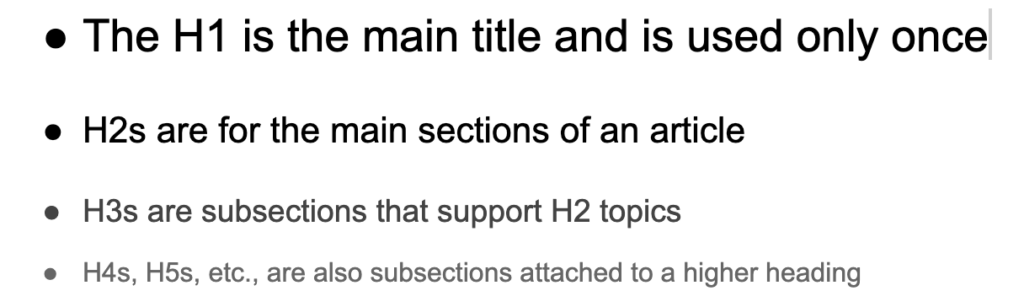
Headings should be short, ideally 10 to 70 characters.
Technical SEO fundamentals that impact rankings
When discussing on-page search engine optimisation methods above, we mentioned speed and mobile-friendliness contributing to a site’s search ranking. These technical SEO aspects are as crucial as creating high-quality content for generating organic traffic. Let’s explore them below.
Page speed and core web vitals optimisation
Have you ever waited more than 5 seconds for a page to load? Yeah, we neither. At 3 seconds or so, it feels like a dead end, making users reach for the X button. A webpage should load under 3 seconds, or visitors will quickly close the page, increasing the bounce rate. High bounce rates are a negative signal for search engines.
To improve page speed, you should
- Compress images, GIFs, and videos to the smallest possible sizes.
- Minimise your use of CSS, HTML, and JavaScript code scripts.
- Use a content delivery network (CDN) to deliver content from servers closest to a visitor’s location.
Here’s a free tool for checking page speed: PageSpeed Insights.
Mobile-first experience and usability
Mobile devices comprise over 60% of online traffic, so search engines prioritise mobile optimisation. All text and visual content should automatically adjust to smaller mobile screens, enabling users to view them legibly like they would on a desktop.
An effective SEO approach is designing for mobile screens first, not desktops.
- Insert large buttons and easy-to-tap links.
- Use hamburger menus (three stacked horizontal lines that lead to a hidden menu of navigation links) instead of long dropdown menus.
- Limit the use of popup and interstitial ads that cover a whole mobile screen.
- Ensure content is easily scrollable on mobile devices.
- Adhere to the “thumb zone” rule, which we’ll explain later in this guide.
Crawlability and indexation
Crawlability is the ease with which search engine bots can navigate your website pages, crawl data, and add this data to the search index. Crawlers work autonomously, but they rely on site owners guiding them to the right data. Otherwise, they can crawl random data bits that aren’t relevant for search engines.
Upload a sitemap.xml file to your site’s directory. This sitemap lists your website’s pages and the relationships between them, helping crawlers index the pages faster. Also, upload a robots.txt file that specifies which pages search crawlers should crawl. Otherwise, they can crawl irrelevant pages or pages containing sensitive data.
Crawlers are assigned a ‘budget’ for each session. By having sitemap.xml and robots.txt files, you help crawlers maximise their budgets by indexing the most relevant information.
Fixing technical issues (redirects, duplicates, 404 pages)
Scan your website for technical errors and rectify them immediately. Such errors include:
- Redirects. A page redirecting to another unintended page, confusing web crawlers.
- Duplicates. Multiple pages having the same content, making crawlers index the same information repeatedly.
- 404. Page links leading to “404 page not found” errors. Such pages should be deleted to prevent crawlers from hitting a dead end.
Internal linking strategy and site structure optimisation
Websites should have internal links, which are hyperlinks to other pages of the same website. Internal links provide context and help search crawlers understand your content better. For example, when writing an article about “the best fashion boots,” you can suggest pairing boots with a nice piece of clothing and link to “the best t-shirts to wear.” Some readers will click on the t-shirt link, generating more traffic for your site. Search crawlers also index this link and suggest it in relevant search queries.
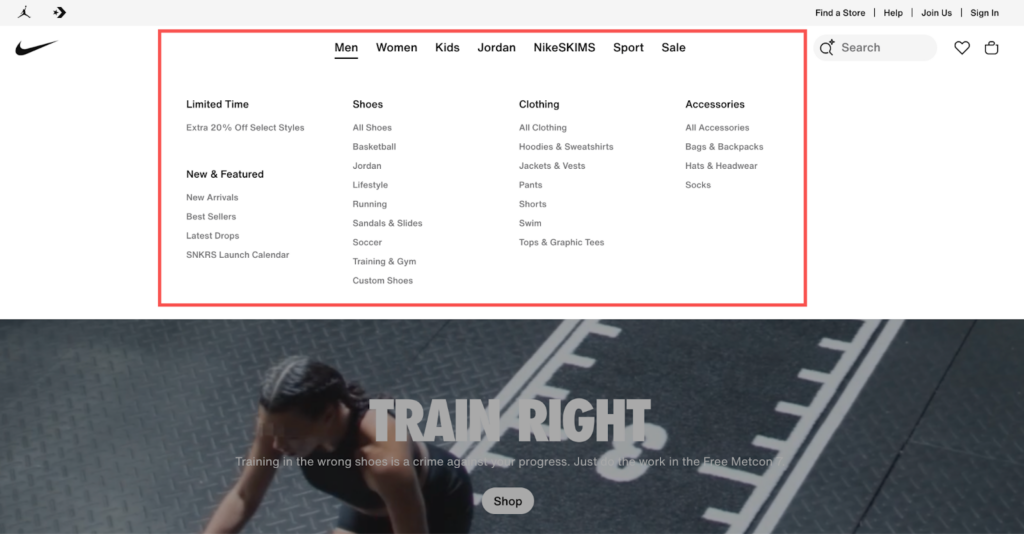
Also, optimise your site structure to make it easy to navigate. Ideally, have clear menus and submenus at the top of the website, guiding users to the most important sections. The footer should have links to your “privacy policy,” “terms & conditions,” “contact us,” and “about us” pages. Easy navigation encourages readers to deeply engage with your content.
Content structure, readability, and user experience (UX)
Content should be structured coherently, making it easy to read. Websites should have a generally friendly user experience, as search engines prioritise mobile-friendliness when ranking sites.
Improving content hierarchy and scannability
We’ve mentioned using H1, H2, and H3 headings as one of the actionable SEO techniques that work, as it helps readers follow through with your content.
These actions make scanning through content very convenient. Notice how we wrote this section with clear hierarchy and scannability in mind 🙂
Mobile-friendly formatting and readability
Web pages should have minimal clutter, and elements should adjust automatically for smaller mobile screens. Text and visuals should be clearly separated from each other. Maintain consistent colors and layouts as users navigate different pages, providing a coherent experience. These tips keep visitors engaged, and search engines prioritise sites with longer average-time-spent-by-visitors.
It’s said that 75% of mobile users rely on their thumbs for interacting with sites, and nearly half of them hold their phones with one hand. This pattern creates a map of sort-of “invisible fences” on the mobile screen:
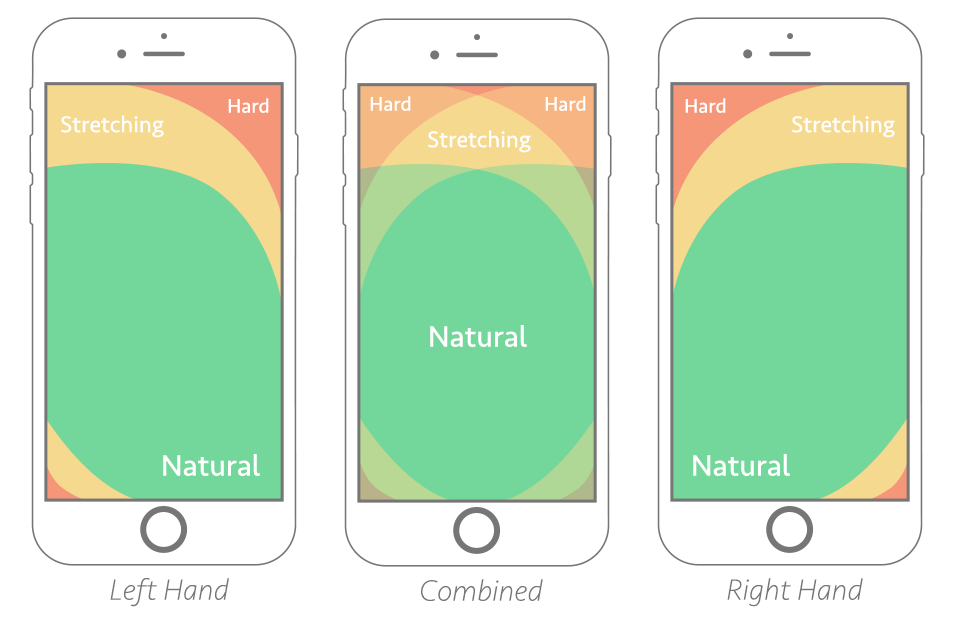
- The Natural zone is where interactions feel effortless.
- The Stretching zone is accessible, but requires users to stretch their thumb further, so it’s inconvenient.
- The Hard zone is physically strenuous to reach without a user shifting their smartphone.
Given this “thumb zone” rule, it’s advisable to place important buttons only in the Natural zone. Placing buttons in the Stretching or Hard zones reduces conversions.
Building topical authority and semantic relevance
To establish topical authority, create broad, interlinked content clusters for specific topics. For example, a fashion retailer can create blog posts on “the best clothing to wear for [specific event]” and interlink all posts. The interlinked content pieces cover the subject of “picking clothing for various occasions.”
For semantic relevance, focus on a broader conversation rather than a specific keyword. For instance, if your topic is “clothing,” discuss related concepts like “accessories” and “jewelry” to provide depth. Search engines prefer sites that demonstrate topical authority, so go all in on it.
Link-building strategies to increase domain authority
Link-building entails seeking backlinks from sites similar to yours. Backlinks from reputable sites represent a ‘vote of confidence’, signaling to search engines that you have trustworthy content. The more high-quality backlinks amassed, the more search engines and AI chatbots are likely to recommend your site.

The first step to getting backlinks is posting high-quality content that other sites will naturally link to. You can also contact website administrators to offer backlink exchanges, where they’ll link to your site and you’ll link to theirs. Even if you’re just starting, it never hurts to ask for backlinks.
Use SEO tools like Semrush to identify which sites your competitors get backlinks from, then target similar sources.
Improving organic CTR through titles and meta descriptions
Earlier on, we mentioned adding title and meta description tags to each web page. Both titles and meta descriptions should incorporate relevant keywords, sound compelling, and match user intent. Title tags should ideally be under 60 characters, and meta descriptions should be 150–160 characters with spaces.
For example, for a guide on the best gadget deals for the Christmas season,
- The title could be: The Best Gadget Deals We Found for the Christmas Season.
- The meta description could be: These are the best deals to take advantage of and secure affordable gadgets this Christmas season. Snag the best gadgets for yourself, family, and friends.
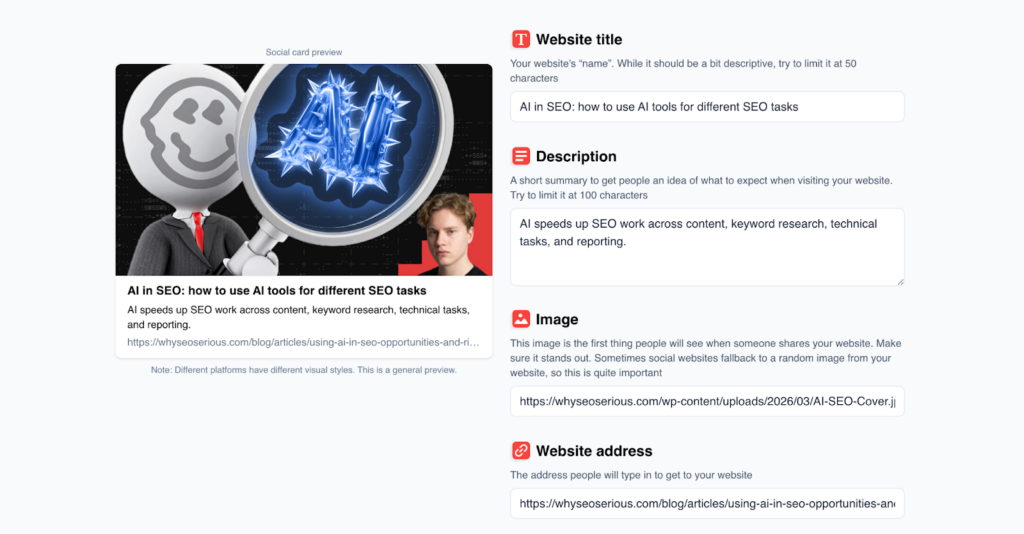
The title tag and meta description speak directly to a user searching for electronics deals during the upcoming Christmas season. It matches the user intent, so your page will likely get recommended when people search for “Christmas gadget deals” or something similar.
Optimising for SERP features and featured snippets
On a search engine results page (SERP), users can find featured snippets giving them exactly the information they seek. The snippet looks like this:
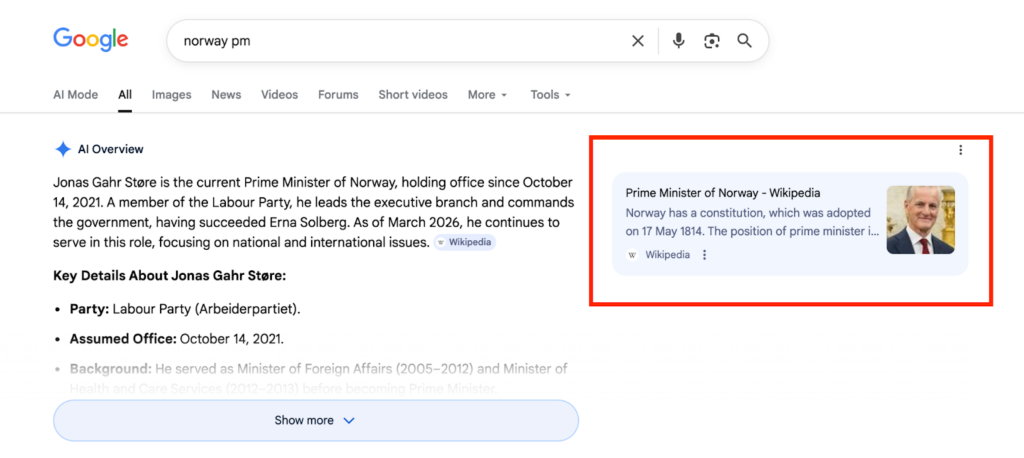
SEO tools can help you identify keywords that trigger snippets, and you’ll create content that matches these keywords.
Featured snippets and People Also Ask (PAA)
To optimise a site for featured snippets, post concise, well-structured, informative content that answers users’ exact questions (who, what, and how). Use bullet points, tables, and Q&A formats to structure the content. A site that gets featured snippets receives more traffic, as the snippet is the first thing the user sees and will likely click on.
Also, use schema markup to define entities (people, places, and things) on your website. Schema markup helps Google know exactly what the content is about and recommend it to the right users. For example, it tells Google the difference between Apple, the fruit, and Apple, the company that makes iPhones.
Updating and refreshing existing SEO content
Keeping content always up-to-date is among the best SEO strategies. Content must be constantly updated to remain relevant for future readers. For example, after writing a blog post about “the best fashion boots of 2026,” you’ll need to update it for 2027, 2028, and beyond. Otherwise, the post becomes outdated to search engine algorithms. You can also add new entries or revamp the whole content to keep attracting readers.
Ideally, have a schedule for updating blog posts, product pages, and other content on your site. It could be weekly, monthly, annually, or biannually, depending on the content type.
You can use Google Search Console or Analytics to identify old pages with declining traffic, signaling the need for an update. Replace outdated statistics, add new trending keywords, and provide new information on these old pages. You’ll likely observe a traffic increase afterwards.
Scaling SEO with advanced strategies and automation
Thanks to AI, a lot of organic SEO techniques have been automated. Implementing SEO tricks doesn’t require as much manual work as it usually did.
For example, you can use AI tools to analyse top-ranking keywords, then get ideas on creating content for these keywords. AI tools can draft detailed article outlines, create meta descriptions & title tags, and suggest how to incorporate keywords in an article. Human editors do most of the job, but AI tools provide valuable help like never before.

Site owners can use software tools to identify link-building opportunities, analyse competitors’ SEO strategies and techniques, and forecast search trends. They can achieve much more with less manual effort.
Programmatic SEO for scaling content
Site owners can scale content programmatically through software tools. These tools first identify keywords with high demand, build a database of these keywords, and create content templates based on them. You can generate content based on unique prompts, then edit them to sound more human-like. AI tools help you create high-quality content with less effort, making them a critical part of how to do organic SEO.
Long-tail keywords and linkable assets
Create in-depth content, like user guides and how-tos, that cover a topic comprehensively. Naturally, other websites are encouraged to link to such content, directing their readers to yours to get valuable information. In-depth content also attracts readers with high purchasing intent who are ready to click on ads, affiliate links, and Add to Cart buttons. With SEO tools, you can quickly identify long-tail keywords to create in-depth content around.
Common SEO mistakes that limit organic traffic growth
Website owners sometimes make mistakes that inhibit organic traffic growth. These mistakes, seemingly mundane, can significantly dent search engine rankings. They include:
Ignoring search intent and user needs
Publishers often create content while ignoring search intent. You may create the most informative guide about a topic, but it won’t get much traffic if the topic isn’t popular with readers.
For example, posting an article about do-it-yourself (DIY) house building during the winter season won’t get as much attention compared to the summer season. Construction is generally harder in winter, so DIY builders don’t search as often for online guides as they do during the summer. Considering search intent, the summer is the best period to post the article.
Use SEO tools to find high-ranking keywords, indicating significant audience interest, then create content for these keywords. Analyse what your target audience searches for and write articles that answer their questions.
SEO tools have made identifying search intent easier than ever. Search trends change, so the process doesn’t stop. Publishers need to keep analysing emerging search trends and creating content that matches the trends.
Keyword stuffing and over-optimisation
Some website owners take keyword optimisation too extreme, inserting keywords excessively or in places they sound unnatural. Search engines detect keyword stuffing and penalise sites engaging in this practice. Keywords should be placed naturally and ideally be 1–2% of a page’s word count.
Take the below sentence for example:
- We sell custom t-shirts for men. Our custom t-shirts are the best you’ll find in NYC. Buy our custom t-shirts and get free gifts today.
“Custom t-shirts” is mentioned three times in a short paragraph, which constitutes keyword stuffing that search engines penalise sites for. Instead, it can be:
- We sell the best custom t-shirts for men in NYC. Order some t-shirts and get free gifts today.
Above, it sounds more natural, and the primary keyword is mentioned just once. Search engines will trust this sentence above the other.
Publishing thin or low-quality content
When writing content to answer trending search queries, publishers can make the mistake of writing short listicles or guides that don’t provide much context. For example, in an article about “the best cars of 2026,” the text may include just the names of each car and a few technical specifications, without going in-depth. These guides only touch the tip of the iceberg and leave readers’ curiosities unsatisfied. Search engines deprioritise sites with such content.
Content should provide both context and depth. Go deep into a topic, use structured headlines, and add visuals. Write well-researched information and cite credible sources when discussing statistics. Thoroughly edit content for grammatical and spelling errors before publishing.
Weak internal linking structure
Site owners often publish posts with little to no internal links, and this negatively affects search engine rankings. Such a mistake should be avoided.
Place internal links where possible, as they help search engines understand your site’s hierarchy. Internal links also guide site readers to other relevant content, improving engagement rates.
Ignoring technical SEO issues
Webmasters may fail to address technical issues like 404 errors, redirect loops, poor loading speed, inadequate mobile optimisation, and misconfigured robots.txt and sitemap settings. Often, site owners are too focused on content that they ignore these technical issues. However, technical SEO is just as important as content creation.
Scan your website for errors and address them immediately. Search engines penalise sites with technical errors, causing lower traffic. Google provides free tools like the Search Console and the PageSpeed tester to identify technical issues.
Not updating or refreshing content
Updating content is one of the most crucial SEO methodologies, but site owners often ignore this. Content gets outdated as time goes, losing relevance to search engines and AI crawlers.
To avoid losing relevance, content should be updated with new information over time. Pages should be updated with new data, and articles should incorporate emerging information. After all, who needs an article about the best bikinis of 2025 when it’s 2026 (even if the best bikinis remain the same)? Updating the year makes a major difference.
FAQs: SEO techniques to boost organic traffic
How long does it take for SEO to increase organic traffic?
SEO marketing techniques often take 3 to 6 months to generate higher organic traffic. Within 6 to 12 months, you’ll notice the most significant traffic results. SEO is a long-term effort that takes some time, so don’t expect quick results. Bank on it in the long term, and you’ll likely draw significant traffic to your site.
Which SEO techniques are most effective today?
The best search engine optimisation techniques range from structuring content properly to creating in-depth content, inserting internal links, getting backlinks, fixing technical issues, and prioritising mobile friendliness. When implemented, these search engine optimisation strategies lead to sizable traffic increases.
How often should you update SEO content?
There’s no specific rule on updating content. However, widespread updates every 3 to 6 months are a good starting point. This frequency keeps your content on par with most competitors and boosts organic traffic.
Can you grow organic traffic without backlinks?
Technically, yes, but the lack of backlinks seriously limits search prospects. Backlinks signal your site’s authoritativeness to search engines, making the site more likely to be recommended. Amassing backlinks is one of the key SEO methods that shouldn’t be ignored.
Conclusion
Effective search engine optimisation requires following key steps, which we’ve explored in this guide to the best SEO strategies. These steps boost a site’s relevance to both search engines and AI chatbot crawlers. Recommendations on search results and chatbot responses boost your site’s traffic significantly. A lot of these SEO steps have been automated, thanks in part to AI, helping site owners achieve more with less effort. Get ready for traffic spikes as you follow this guide!