Contents
AI Brand Monitoring in 2026: How to Track Mentions Across AI Search Engines
People aren’t just googling anymore. They’re asking ChatGPT, Gemini, and other AI assistants what to buy. Whether shoes, wristwatches, gadgets, furniture, or anything people want, recommendations that would normally come via search engines now increasingly come from AI citations, and this change has created a new requirement to monitor your AI brand visibility. How do you do that, and how can you select the best AI brand monitoring tools? For answers, look no further than this in-depth guide to AI brand monitoring in 2026.
What is AI brand monitoring, and how does it work?
AI brand monitoring involves tracking when and how AI assistants mention your brand. It works by feeding AI assistants real-world questions, then analyzing the response. These are highly relevant, broad-ended questions, more like “What’s the best endpoint management tool for businesses?” and not generic ones like “Is [my brand name] a good solution?”
For instance, if you own a cosmetics brand, you want to know whether your brand appears in questions like “Can you recommend a lightweight sunscreen for me?” and “What type of serum suits my oily skin?” If your brand appears in a response, you then want to know whether the AI assistant describes the brand positively, negatively, or neutrally, and how accurate the description is. You’d also want to note which reviews, third-party sites, and articles the AI assistant relied on to talk about your brand.
You don’t have to sign up for numerous AI assistants and start feeding them questions yourself. Instead, specialised AI brand visibility monitoring tools run the queries for you, while you monitor the results over time.
| Traditional social listening | AI brand monitoring | |
| Data sources | Social platforms, blogs, forums, and news sites | Querying AI models like ChatGPT, Claude, and Perplexity |
| Core metrics | Mention volume, brand reach, and engagement rate | Brand mention frequency, Share of Voice, and citation context (positive, negative, or neutral) |
| Tracking mechanisms | Keyword triggers, hashtags, and natural language processing (NLP) | Prompt testing and API-based AI model queries. |
Brand monitoring across AI search engines: 5-step execution framework
Above, we summarised how AI brand monitoring works, but the actual process involves various intricate steps, from mapping high-intent prompts to feed the AI search engines to running queries, tracking citation sources, measuring response accuracy, and benchmarking your mentions against the competition. Let’s look at each step in detail.
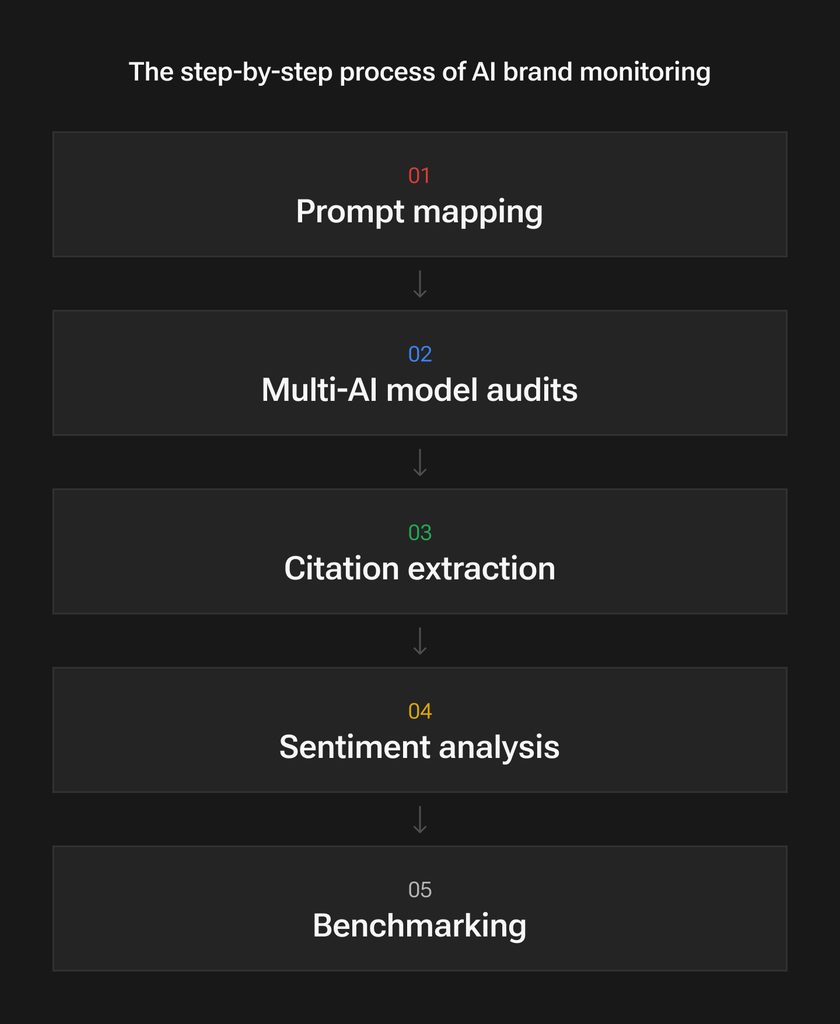
Step 1: Mapping high-intent prompts & query clusters
The process starts with curating high-intent prompts similar to what real users ask AI assistants. As we mentioned earlier, these are broad-ended questions, not specific questions about your brand. For example, if you run an athletic apparel brand, it’s not “Is [apparel brand name] good?” but more like “Can you recommend the best joggers for my daily workouts?”
AI brand monitoring tools use algorithms to curate high-intent questions, so don’t worry about stressing yourself to think of hundreds of queries. Your selected tool simulates a large volume of data to identify the most relevant prompts users would ask in different scenarios. These include
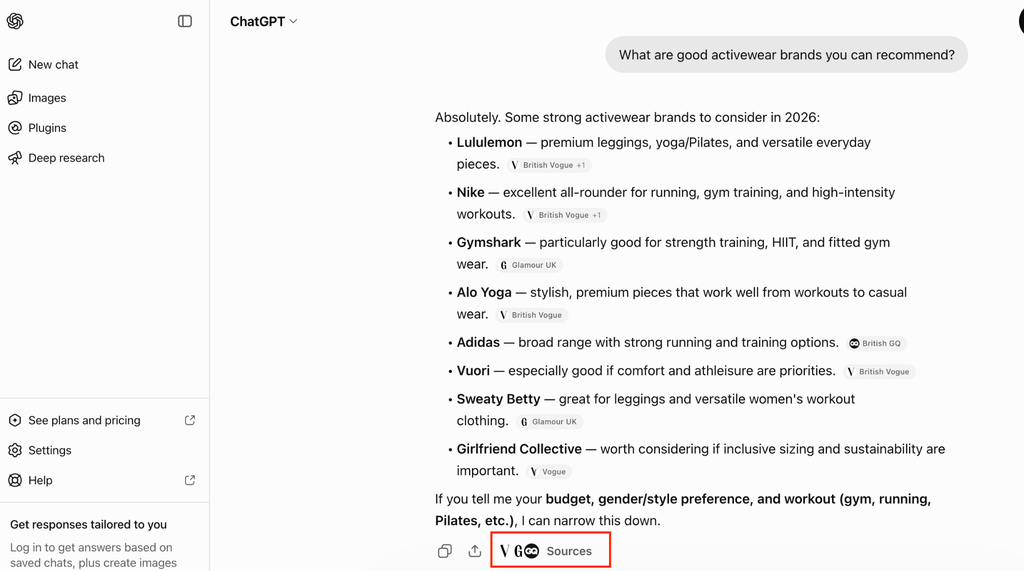
- Informational prompts like “What are good activewear brands you can recommend?”, mapped to the awareness stage.
- Comparative prompts like “Please compare sportswear brands A, B, and C, and let me know their pros and cons,” mapped to the consideration stage.
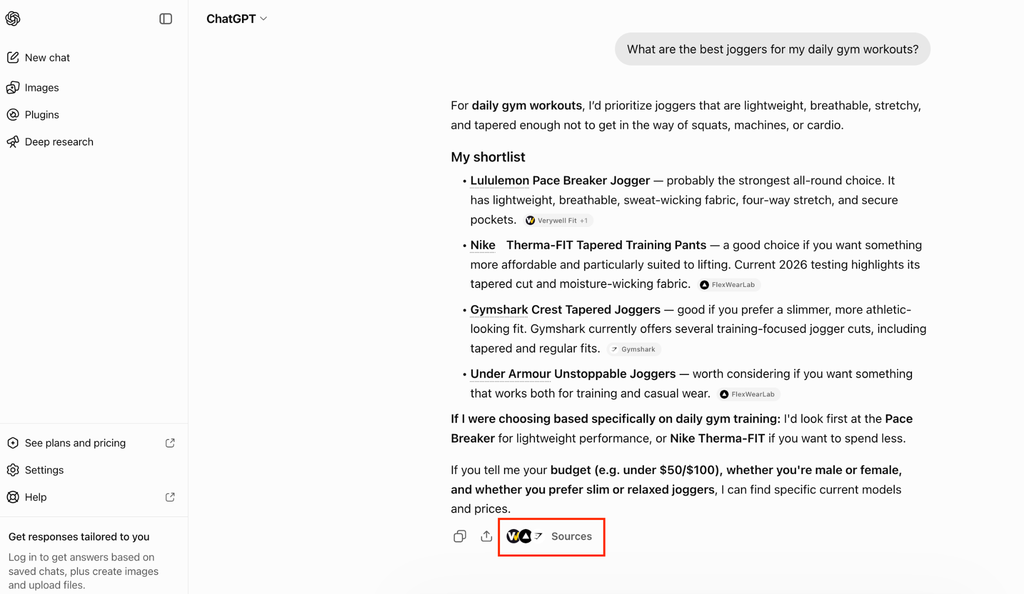
- Transactional prompts like “What are the best joggers for my daily gym workouts?” mapped to a real-world user’s purchase decision.
Step 2: Running multi-platform AI search audits
With the prompts curated, your AI brand monitoring tool gets to work, feeding the prompts to multiple AI search engines like ChatGPT, Google AI, Perplexity, and Claude. It then documents the responses to be analysed for brand visibility.
A typical audit involves 30 to 50 real-world queries for each AI search engine, including both informational, comparative, and transactional queries. These queries are sent in fresh incognito sessions with history disabled so that the AI assistant doesn’t incorporate any previous context or conversational history. You need to know what response is given to users who haven’t previously interacted with your brand, asking questions from a fresh perspective.
Step 3: Tracing citation sources and digital footprints
With prompts asked and responses curated, tracing citation sources and digital footprints is the next step of brand monitoring in AI search. This step maps how ChatGPT, Claude, Perplexity, and other large language models (LLMs)
- Name your brand without linking to your website.
- Name your brand while linking to third-party sources.
- Mention your brand while linking to your own website.
You want to know which third-party sources LLMs cite when recommending your brand, from news articles to forums, social media platforms, directories, and more. Then, you also want to know which pages on your website are cited when mentioning your brand. With this knowledge, you can optimise the website pages to get the best results, and also fine-tune how your brand is mentioned on third-party sites.
Step 4: Measuring sentiment polarity and feature accuracy
Is your brand mentioned as a top choice, an everyday alternative, or mostly buried behind other competitors? You also want to know this, and that’s what AI visibility tools handle in this step.
Measuring sentiment polarity means tracking how AI search engines frame your brand’s tone, whether positive, negative, or neutral. Do they recommend your brand confidently or frame it as a third, fourth, or fifth option using a cautious tone?
Feature accuracy tracks how correctly AI search engines describe your brand. Do they get a product’s specifications and pricing right, or give wrong or outdated information?
Technically, AI models don’t understand factual information but work by guessing the next words based on statistical analysis, so they can ‘hallucinate’ by fabricating details or mixing up your brand’s details with a competitor’s. This makes evaluating the accuracy of your brand mentions highly important, and AI visibility tools help you do that.
Step 5: Benchmarking Share of Model Voice (SOMV) and citation gaps
With sentiment polarity and feature accuracy evaluated, competitive benchmarking and analyzing citation gaps are the final steps. You don’t just need to know how your brand gets mentioned but also how it gets mentioned relative to your competitors. Across the high-intent queries, what percentage of responses mentioned your brand, and what percentage mentioned your competitors? AI visibility tools provide this essential data.
Identifying citation gaps involves reviewing whether AI assistants link more to your website than third-party sources, or vice versa. It also includes knowing which review sites, directories, forums, and third-party sources your brands are mostly cited on, and which you want your brand to be cited on but are missing.
With citation gaps identified, your objective is to build a presence on those sources where your brand mentions are missing. For example, if you observe a lack of social media citations, it’s a signal to build an active presence on Instagram, Facebook, X, and other social media platforms. If you observe inaccurate information coming from online directories, it signals to create a profile on these directories and publish the right information for LLMs to cite.
Want effective brand monitoring and to quickly close AI citation gaps?
Why SEO Serious is right here to help your brand do that and elevate your AI model rankings.
Selecting the best brand visibility monitoring tools for AI search
Various AI brand visibility monitoring tools exist, and we’ll summarise popular options below. But first, let’s look at some key features to consider when selecting one.
- Multi-engine coverage. You need a visibility tool that covers many AI assistants, from ChatGPT to Perplexity, Google AI Overviews, Claude, DeepSeek, Llama, and more.
- Context tracking. Look for tools that provide context for brand mentions, telling you whether they’re positive, negative, or neutral. It’s not enough to know how many AI assistants mention your brand, but what’s more important is knowing how they recommend your brand to users.
- Actionable insights. The best AI visibility tools don’t just evaluate and curate metrics for you. They convert these metrics into actionable insights that you can use to gain better brand visibility. For example, if brand mentions skew negative, you’ll get tips on how to optimise your content for more positive mentions.
Here are some of the best AI search brand visibility monitoring tools:
| Tool | Primary focus | Key metrics | Best for |
| SE Visible (by SE Ranking) | In-depth visibility monitoring across Google AI Overviews, ChatGPT, Perplexity, and Google Gemini. | Visibility, Share of Voice, average position, and Net Sentiment | Agencies and multi-brand businesses |
| Profound | Citations and brand mentions across 10+ AI assistants | Visibility score, Share of Voice, and average position | Enterprise sales teams |
| Frase | Daily AI citation monitoring | Citation rate, citation context, Share of Voice, brand mention frequency, and buyer stage coverage. | Content and marketing teams |
| Semrush AI Visibility | Pairing AI visibility monitoring with detailed traditional SEO audits | Visibility score, mentions, citations, and monthly query audience | Existing Semrush users who want to merge SEO audits with brand monitoring across AI search engines |
Key AI visibility metrics
Above, we’ve mentioned key visibility metrics like Share of Voice, average position, and brand mention frequency. Let’s describe them in more detail.
- Share of Voice. The percentage of prompts that mention your brand compared to that of top competitors. The aim is always to outrank competitors in this metric.
- Brand mention frequency. How often your brand is mentioned in AI-generated answers. The higher it is, the better.
- Average position. Your brand’s average placement (ranging from top to bottom) in AI-generated responses. This metric is important because the top brands capture most user attention.
Using AI for brand study: Coca-Cola case study
Coca-Cola, the popular drinks brand, offers a good case study of using AI for brand monitoring. Already one of the top-ten recognised brands worldwide, Coca-Cola still emphasises real-time monitoring to ensure that its brand recognition doesn’t lag behind competitors.
In recent years, Coca-Cola has deployed several AI systems to monitor its traditional brand visibility and also AI search visibility. For example, in 2025, the company used its proprietary Hey AI! Model to analyse social media posts and discover what foods Saudi Arabian customers paired with Coca-Cola drinks. Then, this info helped the company serve effective personalised ads.
Coca-Cola also unveiled Project Fizzion, in partnership with tech giant Adobe, to help creative teams across 200+ markets maintain brand consistency while running marketing campaigns for various Coca-Cola products. With this system, creative teams can quickly implement its brand guidelines when designing marketing campaigns, helping Coca-Cola remain consistent and dominant in its market. These are just a few examples of businesses deploying AI for brand monitoring, and we expect to see much more as AI systems become more accessible for smaller companies over time.
Brand monitoring in AI search and Generative Engine Optimisation (GEO) strategy
AI brand monitoring shifts your focus from just tracking search engine keyword rankings to now tracking citations, Share of Voice, and accuracy on AI search assistants. This shift has happened because of the explosive growth of ChatGPT, Perplexity, Gemini, and other AI models.
Customers no longer just look at search engine links, but ask full-fledged questions to AI bots and get detailed answers, with no need to click on links. With this change, having your brand cited by AI assistants is as important as ranking high on traditional search results pages. Just as search engine optimisation (SEO) covers the steps taken to boost search rankings, generative engine optimisation (GEO) refers to the steps you take to increase AI citations.
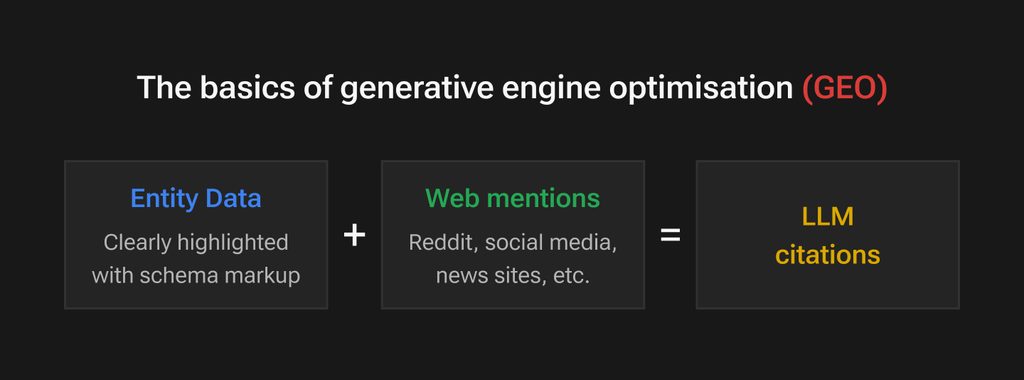

Some key generative engine optimisation techniques include:
- High-quality content. Publish informative content with key data points and insights. Provide direct answers immediately after a heading, and organize your content with bullet points, lists, H2 and H3 headings, making it easier for AI crawlers to parse.
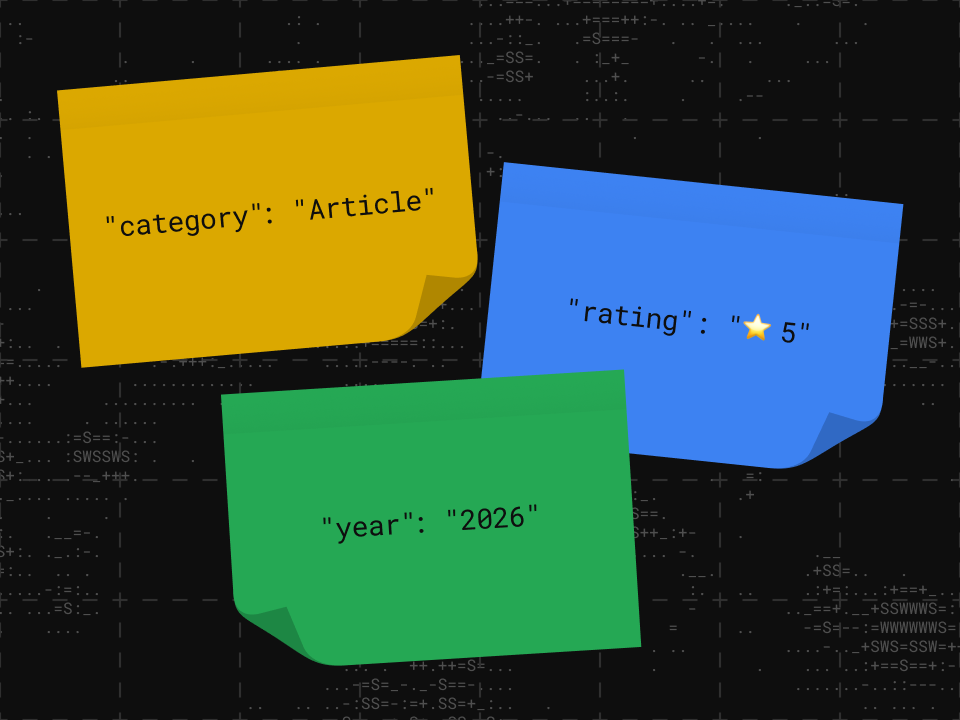
- Technical optimisation. Use schema markup to highlight key data for AI models and optimise your website’s loading speed to make it easier to retrieve data from.
- Conversational tone. Write in a conversational tone, like you’re speaking directly to a reader. This tone reflects how users interact with AI bots, making the bots more likely to cite your content.
SEO and GEO overlap in strategies, particularly maintaining good technical site health (speed and mobile-friendliness) and publishing informative, high-quality content. However, they diverge in goals, where SEO aims for higher search rankings and GEO aims at higher AI model citations, and in metrics, where SEO tracks organic traffic and keyword rankings but GEO focuses on citations, brand mention frequency, and Share of Voice.
Looking for a Generative Engine Optimisation (GEO) partner for your brand?
Why SEO Serious is the go-to partner to elevate your AI citations alongside your traditional search rankings.
Top mistakes to avoid in AI brand tracking
AI brand monitoring is relatively new, so brand owners often make some mistakes when working in this field. It’s better to learn from the mistakes, not repeat them, so these are the top mistakes to avoid:
| Mistake | Why it’s wrong | How to do it right |
| Relying on simple, static prompts, like “How is [brand name] compared to [rival brand name]?” | AI queries are often complex and variable, like “What are the best brands to recommend for this [product niche]?”Relying on simple prompts means missing out on statistics from high-intent users. | Your AI brand tracking should cover complex, multi-variable questions like “Please compare brands A, B, and C. Let me know how they vary in features, pricing, customer support, and ease of use.” |
| Mixing up owned and earned citations. Owned citations are direct references from your own website, while earned citations are those from third-party sources. | Earned citations matter more when evaluating your brand’s external reputation. | If owned citations are numerous but earned citations are too few, put in effort to optimise the latter, not assume that owned citations will maintain high AI brand mentions. |
| Neglecting technical site health | Technical website optimisation, as in traditional SEO, helps AI models crawl your site properly | Implement structured schema to highlight key data and create a well-defined robots.txt file that doesn’t block AI crawlers. |
| Failing to set a baseline | You can only monitor for improvements against a previously set baseline, or you’ll always feel inadequate. | Use your first AI visibility metrics as the baseline, then monitor your progress against this baseline. This way, you’ll know whether there has been clear improvement in brand perception over time. |
Conclusion
Within a few years, AI brand monitoring has become an essential part of your marketing toolkit. We’ve explained why that’s the case, how to use AI for brand monitoring, and how to select the right AI visibility tool for your brand. If you need help monitoring your AI brand visibility and pairing generative engine optimisation (GEO) with traditional SEO, Why SEO Serious is here for you. We’re your go-to partner for optimising websites for both high search rankings and AI citations, so contact us today to elevate your metrics.
Frequently asked questions
How do I monitor AI brand mentions?
You can monitor AI brand mentions at scale using visibility tools like Profound, Frase, and SE Visible. These tools map high-intent queries, run them through multiple AI assistants, curate the responses, measure sentiment and accuracy, and benchmark the AI brand monitoring results against competitors. You don’t have to go through the stress of doing these manually.
How do I track my brand on ChatGPT?
AI visibility tools like Profound and Semrush’s AI visibility toolkit make tracking your brand mentions on ChatGPT easy. You can also run a few relevant queries yourself and monitor the responses for brand mentions.
What is Share of Model Voice?
Share of Model Voice is an important metric that measures how often your brand gets mentioned in search results compared to competitors. It’s the percentage of your brand mentions compared to the total brand mentions among close competitors.
How often should I check AI visibility?
It varies, but we advise monitoring AI brand mentions at least weekly for revenue-critical queries and monthly for broader queries. Regular checks ensure you don’t fall behind in fiercely competitive AI citation rankings.