Contents
Why SEO Is Important for Business in 2026
Many marketing expenses can feel like money spent with little results. Some ads hardly get seen, campaigns don’t generate sales, and promotion deals can get cancelled. This doesn’t mean paid marketing isn’t effective, but that it can be challenging to get the desired results.
Yet there’s a way to achieve more with a smaller budget. It’s called search engine optimisation (SEO), and it generates organic traffic you can rely on in the long term. You’ve likely heard of the term, but what exactly is SEO, and is it important for businesses? Yes, it’s important, more now than ever. Let’s find out what SEO is and why every business needs it.
What is SEO, and how does it work?
SEO entails optimising your website’s content and structure to improve its search engine visibility. It’s what you do to ensure that whenever someone searches for a relevant topic on Google, your website appears on the first page, not on the second, which is fondly called the best place to hide stuff because almost no one enters there.
There are three main SEO branches:
- Technical SEO. Adjusting your website’s backend infrastructure for easy search indexing.
- On-page SEO. Improving the page content to be informative and match search intent.
- Off-page SEO. Building authority through backlinks from other reputable sites.
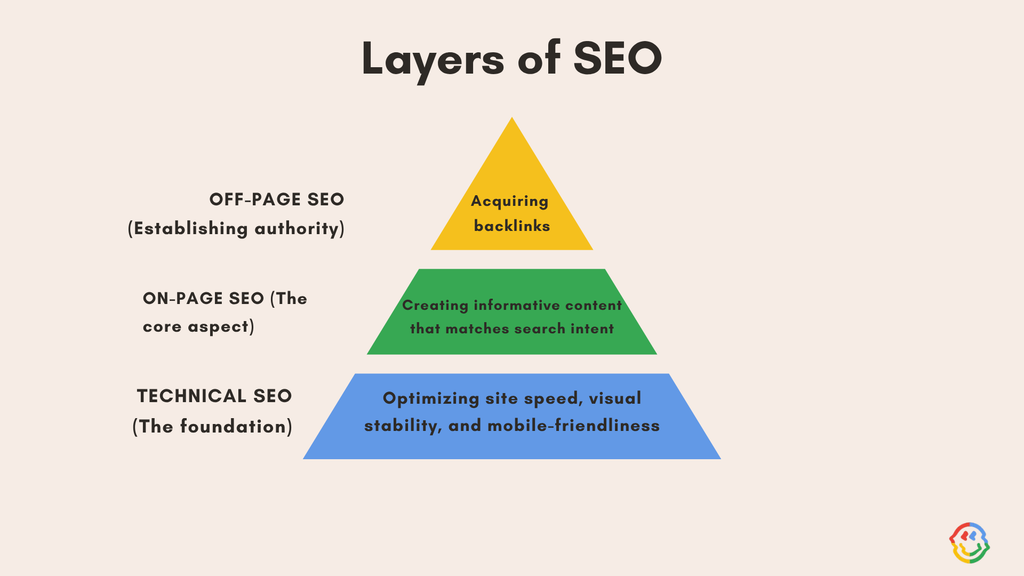
| Layers of SEO | |
| Off-page SEO | Acquiring backlinks |
| On-page SEO | Creating informative content that matches search intent |
| Technical SEO | Optimising site speed, visual stability, and mobile-friendliness |
Why should you invest in SEO (key benefits)?
SEO sounds like a lot, and you’re probably wondering, “Why invest in SEO after all?” The answer is that it comes with many benefits, starting with higher organic traffic. Highly optimised sites are found easily on Google, which means more page views and conversions.
Better off, investing in SEO generates a multiplier effect. Your efforts can generate organic traffic for a long time, unlike ads, where traffic easily falls when the budget stops. Let’s see why SEO is important below.
SEO drives high-quality organic traffic
Many people already search for what you offer. Effective SEO is what helps your site appear in their search results pages. For instance, if you run an online shoe store, there’s no shortage of people searching for “best sneakers,” “best loafers,” “running shoes under $100,” and similar queries. With proper SEO, your website ranks high for these relevant queries and draws higher organic traffic.

SEO is cost-effective compared to paid ads
In the long run, SEO delivers more value for money than paid ads. Search engine or social media ads are effective, but the results often fade away once the budget stops. On the other hand, an SEO investment delivers stable results in the long-term. Websites with established search reputations draw viewers without recurring ad spending. The difference is that SEO takes a longer time to deliver results than paid ads, but it’s worth the wait.
SEO builds brand awareness and authority
Appearing on the first search results page signals trust to users. Websites that consistently rank in the top three become more trustworthy in customers’ eyes. People won’t stress about buying what you offer, as they’re assured of getting good value from brands that rank high on the first page.
SEO improves user experience (UX)
Earlier, we mentioned technical SEO as one of the three main SEO branches. Google prioritises fast, user-friendly websites, so optimising your website to load faster and fit effortlessly on mobile screens are key parts of technical SEO. In the drive for higher search rankings, you’ll also improve your website’s user experience factors, mainly speed and mobile-friendliness, making visitors stay longer.
SEO supports the entire buyer’s journey
SEO covers all three stages of the customer journey: Awareness, Consideration, and Decision. Whether users are seeking a solution to their problem but haven’t yet settled on what to buy (Awareness), users are comparing different options (Consideration), or those who are ready to purchase something and making direct queries (Decision), SEO positions your brand to customers at every stage.
For the Awareness stage, target customers with informative blog posts and guides. During Consideration, use case studies and detailed comparison guides to entice viewers. In the Decision stage, detailed landing pages and pricing sheets help you attract users.
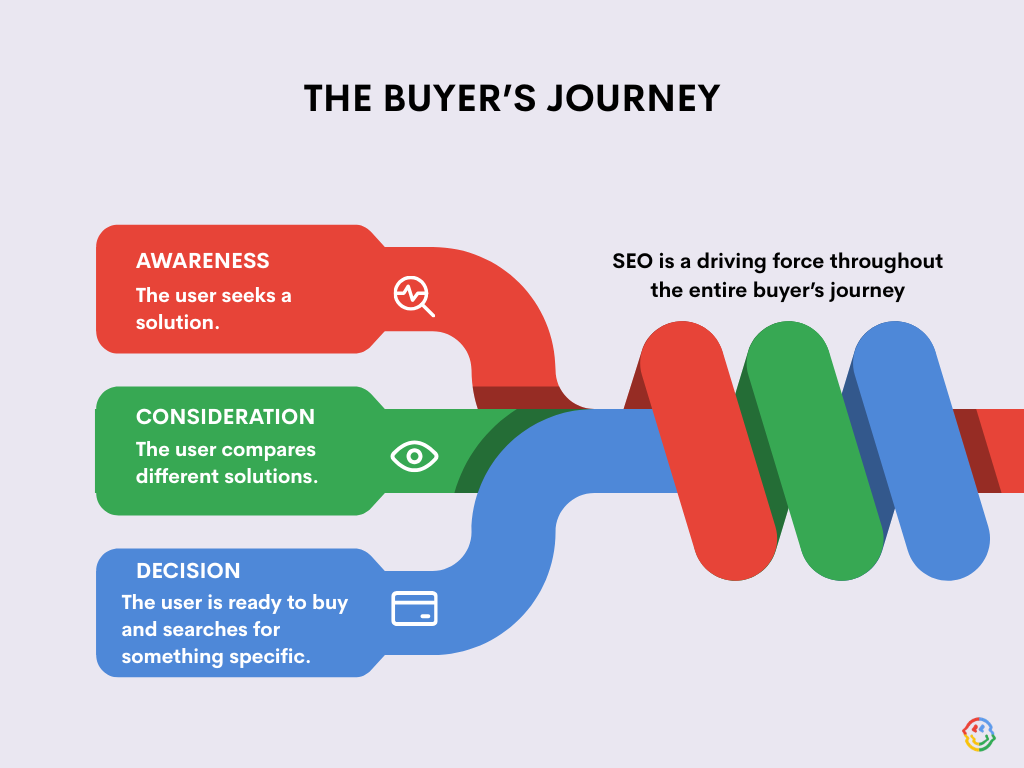
The buyer’s journey
SEO is a driving force throughout the entire buyer’s journey
Awareness
The user seeks a solution
Consideration
The user compares different solutions
Decision
The user is ready to buy and searches for something specific
SEO delivers measurable ROI and results
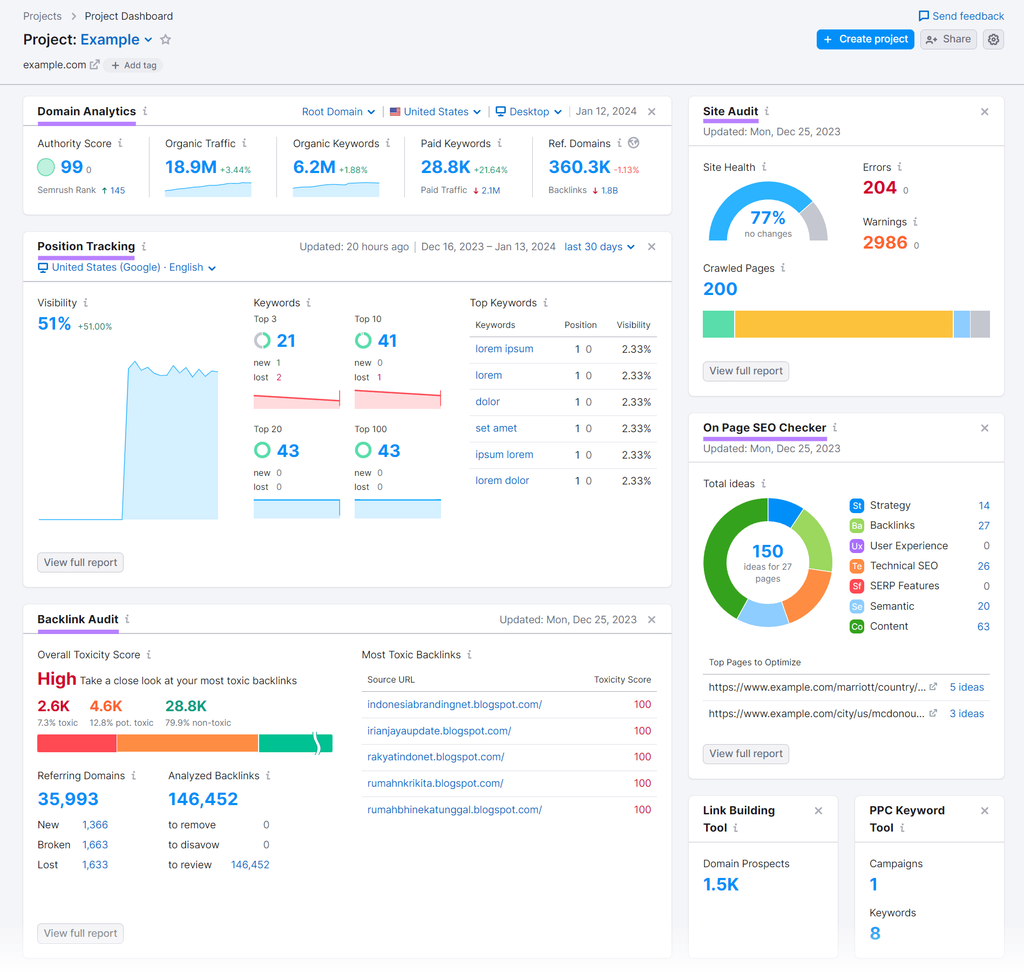
SEO delivers objective results that you can closely watch. Every key performance indicator (KPI) in SEO, like traffic, search position, keyword rankings, click-through rates, conversion rates, and backlink profile growth, can be monitored through an analytics dashboard.
- To measure general return on investment (ROI) from your SEO efforts, the standard formula is [(Revenue from SEO − Total SEO Cost) ÷ Total SEO Cost] × 100. This formula gives the percentage of return compared to what you’ve spent on SEO.
SEO helps you stay ahead of competitors
Many people offer the same thing your business does, so SEO becomes a major differentiating factor. The right SEO strategy helps elevate your brand above many competitors. For better results, analyse your competitors’ SEO strategies, identify the gaps, and fill in the gaps to rank above them. For instance, target important keywords that rivals are neglecting, and you’ll likely earn higher traffic.
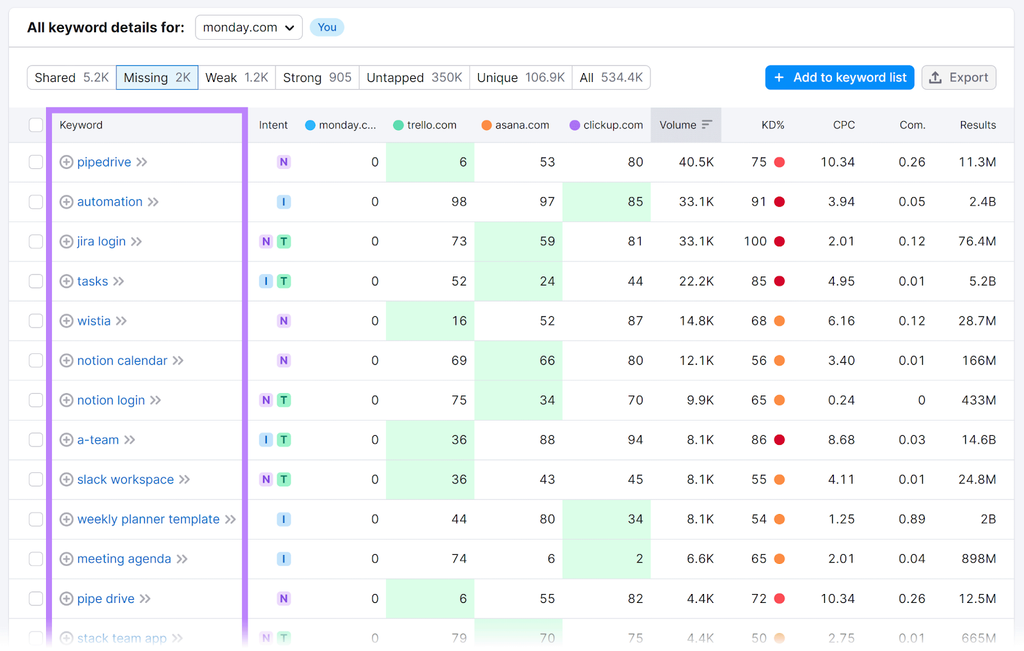
Source: Semrush
SEO works 24/7 and generates passive traffic
They say “diamonds are forever.” Maybe SEO is, too. Your SEO efforts don’t just fade away. Optimised pages continue to attract traffic 24/7, long after the pages were first optimised. Organic growth continues for months and years without spending recurring sums on advertising.
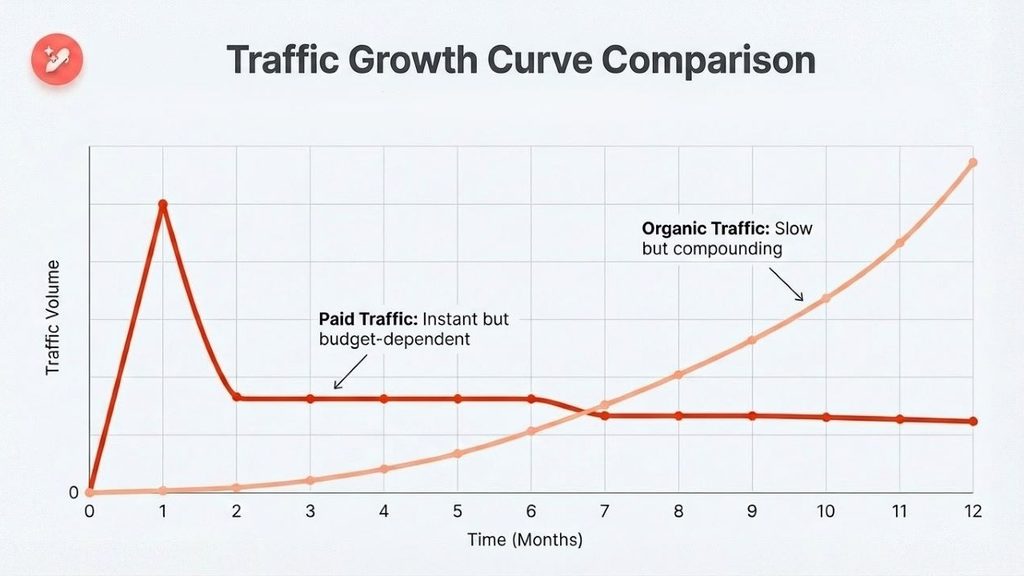
Source: Contentpen
SEO complements other marketing channels
Your SEO efforts don’t stand alone. They complement promotional efforts on social media and email. For instance, you can turn search-optimised blog posts into quick social media posts that’ll drive engagement. Blog posts can also be sent to email subscribers to draw attention to your website. Search data tells your customers’ intent, and you can use this intent to create effective social media and email marketing campaigns.
SEO protects your brand and reputation
SEO is also a defensive strategy for your brand. It puts you in control of your search reputation, so that competitors won’t be the ones leveraging your brand name to boost their own reputations.
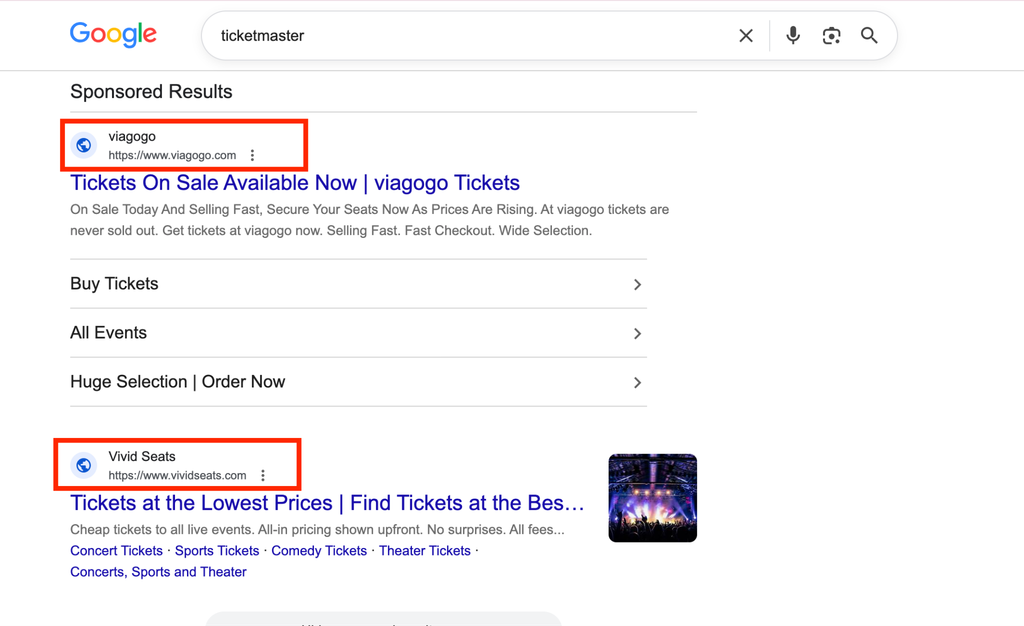
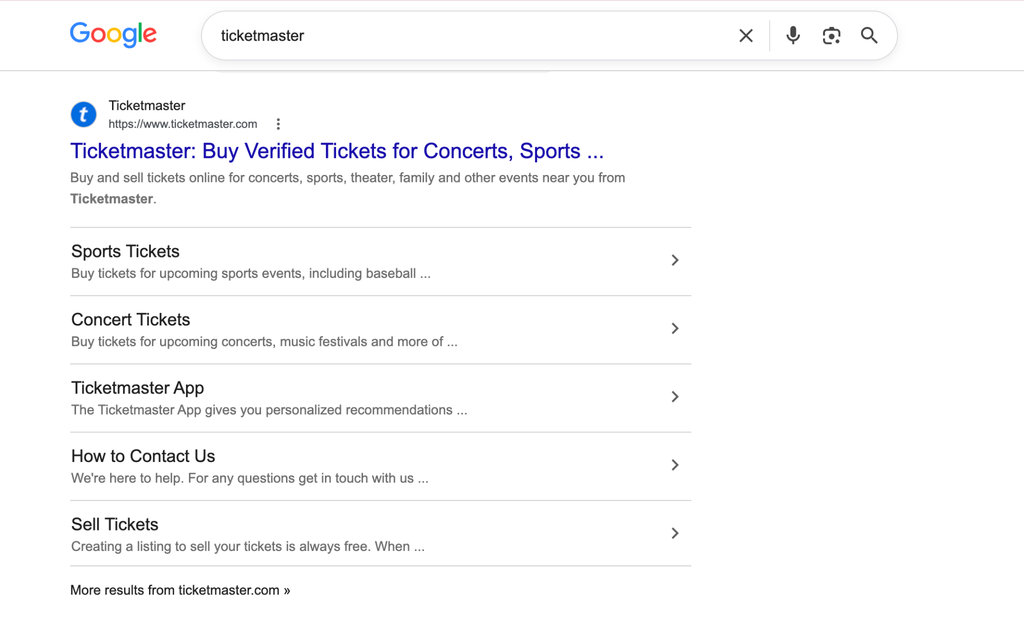
For instance, it’s common for businesses to buy search ads for keywords related to their rival brand names. To illustrate, we searched for “Ticketmaster” on Google, and the first results were ads placed by Viagogo and Vivid Seats, two major Ticketmaster competitors:
Yet, because Ticketmaster recognises why SEO is important and has invested heavily in it, it stands out amongst rivals on the search results page:
SEO in the age of AI: What has changed?
The AI age has reshaped the digital marketing industry, including SEO. Google and other search engines now offer AI results, where users get direct answers in AI summaries, not just links to click on. Visibility is no longer about ranking in the top three to five links, but also about appearing in these AI summaries. Let’s dive deeper.
AI overviews and zero-click search
AI overviews give direct answers in search results, reducing the need to click on links to find what they want. Sources are still cited in the direct answers, but there are generally fewer clicks to go around now. This means getting cited by AI models is now as important as traditional page rankings.
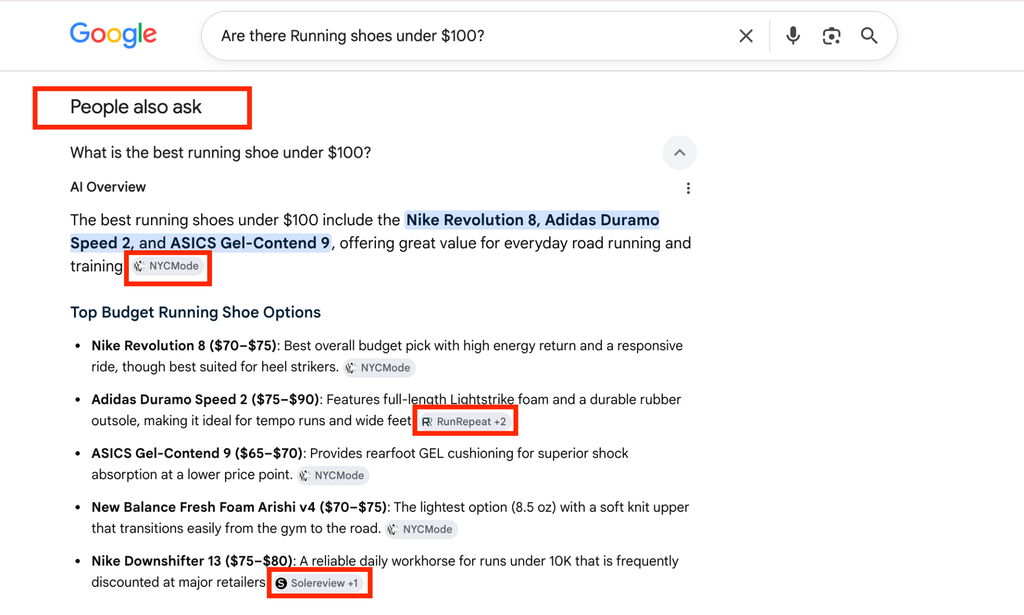
A noticeable trend is that users now type more full, multi-part questions into search engines, not just short keywords. It’s now more of “Which good running shoes can I buy for under $100?” than “running shoes under $100,” and AI algorithms favor sources demonstrating expertise and authority.
Generative engine optimisation (GEO)
Generative engine optimisation (GEO) is the AI counterpart to SEO. It entails optimising your website to get cited by AI models, with strategies like:
- Schema markup. Using schema markup code to indicate various content types (articles, products, FAQs, events, etc.), making them easier for AI algorithms to index.
- Conversational articles. Writing in a conversational tone, like you’re speaking directly to the reader. This conversational tone mirrors how users interact with AI assistants.
- Citations and authoritativeness. Backing up figures and tables with proper citations, inserting expert quotes, and providing original insights to demonstrate authoritativeness.

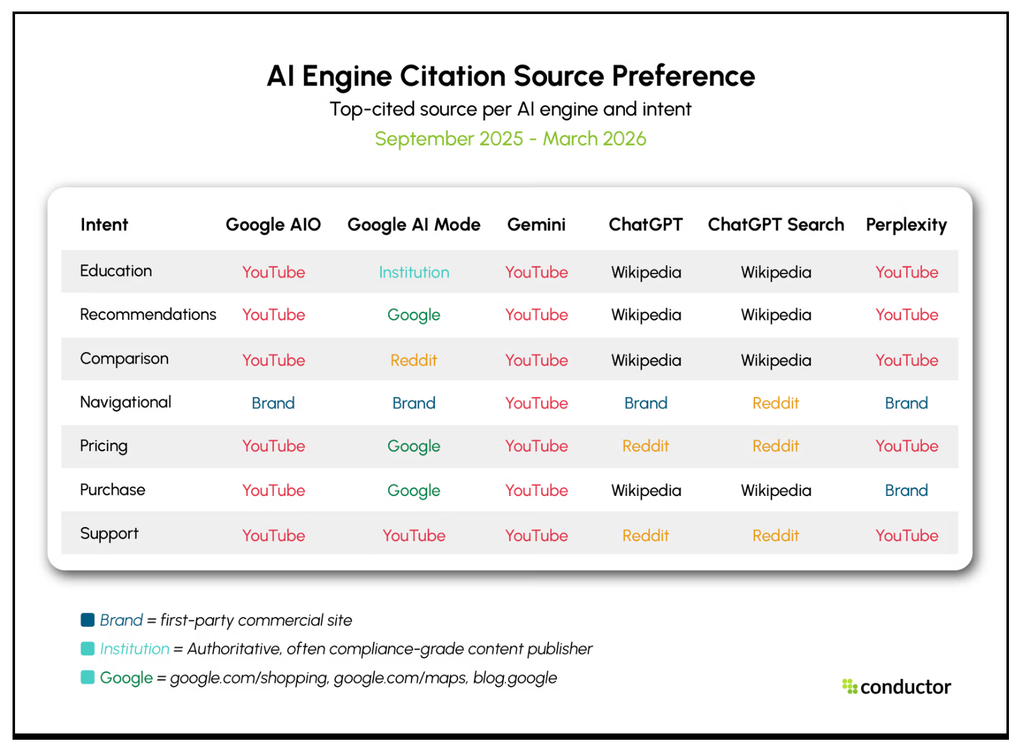
How AI search platforms cite content
AI algorithms prioritise newer or freshly updated content and often quote pages that are already present in Google’s top ten results. This means that SEO remains important even as you optimise for AI citations. It complements GEO to give your website higher organic traffic, so paying attention to both is important.
Source: Conductor
SEO vs. Paid ads: Which is better for your business?
Weighing SEO against paid ads isn’t really an either-or scenario. Both help boost brand visibility, but they vary in cost, durability, and other ways. SEO is more cost-effective, and the results linger in the long run, but ads are better at providing a short-term boost.
| SEO | Ads | |
| Cost | SEO produces higher long-term traffic at lower costs than ads. | Ads produce higher traffic in the short term, but at higher costs. |
| Durability | The results of SEO efforts linger for a long time, drawing constant organic traffic. | Ad-derived traffic boosts often fall significantly once the budget stops. |
| Click-through rate (CTR) | Click-through rates are generally lower for organic search impressions, but still remain effective. | Ads generally produce higher click-through rates, as long as the budget flows. |
| Trust | Users place more trust in organic search rankings because they are perceived as earned through merit and authority. | Users recognise paid ads as sponsored placements and sometimes skip them, leading to lower trust in general. |
| Applicability | SEO is geared toward long-term, compounding results that can take a while to observe. | Ads are for immediate traffic and product launches that need quick visibility. |
Common concerns: Why businesses hesitate to invest in SEO
Some businesses hesitate to invest in SEO because the efforts take a long time to yield results. SEO takes 3 to 12 months, or even more, to gain momentum, unlike paid ads that show results within hours. This immediate reward makes some businesses focus more on ads, but no successful website can afford to ignore SEO in the long run. The effort and the wait are worthwhile because they generate organic traffic you can rely on.
SEO is often perceived as too complex, with frequent technical audits, content strategy meetings, and algorithm updates to deal with, but it isn’t really so. SEO can be handled internally or by external agencies with good results. AI-assisted SEO platforms like Semrush and Ahrefs have made the work easier than ever.
It doesn’t help that some companies have previously worked with some SEO agencies that produced subpar results, so they virtually give up on it. However, you can solve this by choosing a reputable agency with demonstrable experience and results with previous clients. Why SEO Serious is one such agency available at your fingertips.
Some businesses understand why SEO is important, but decide to focus overly on social media marketing. Social media helps, but SEO is very important for drawing organic traffic. As we mentioned earlier, SEO complements social media and email marketing, not negates them.
Fill our form to book an SEO consultation today
SEO myths that make companies hesitate vs. the facts
| Myth | Fact |
| It’s too complex. | It’s technical, but just as technical as social media and email marketing campaigns can also be. |
| It takes too long to yield results. | It takes a while, but you can start seeing results within a few months. |
| It’s difficult to measure the ROI. | With platforms like Semrush and Google Analytics, you can closely monitor all KPIs and know when to make adjustments. |
How to measure the ROI of your SEO investment
ROI on your SEO efforts can be easily measured with the right tools. These tools curate the KPIs and display them in an interactive format. Everything can be closely monitored from your dashboard, including:
Key SEO KPIs to track
- Organic traffic. The number of visitors who came from search engine results pages.
- Impressions. How many times people viewed your site on search engines.
- Clicks. How many people clicked on your link after viewing it.
- Conversion rate. The ratio of clicks to views of your website on search engines. The higher, the better.
- Keyword rankings. Your website’s position for specific keywords and phrases.
- Backlinks. The number of other web pages referring to your website.
- Core Web Vitals. A unique score assigned by Google, taking into account your website’s speed, visual stability, and mobile-friendliness.
Tools for measuring SEO performance
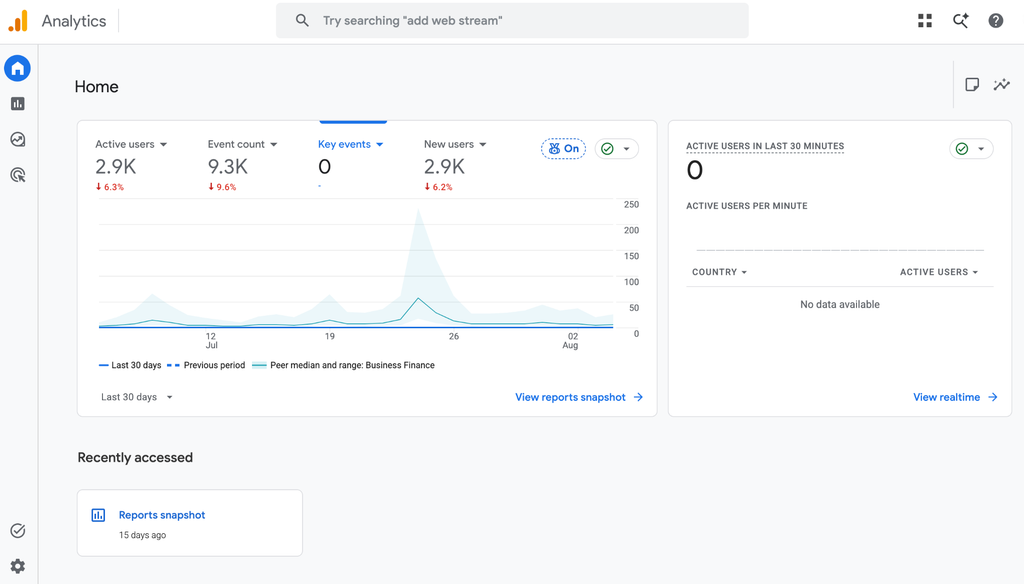
- Google Analytics 4 (GA4). Google provides a free analytics tool to measure your website’s organic traffic, clicks, impressions, and other KPIs.
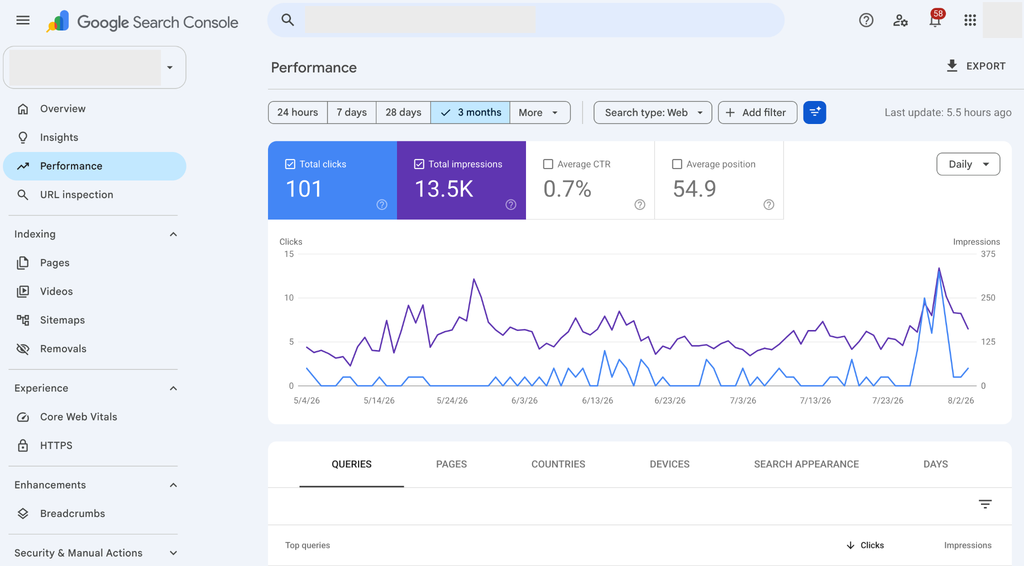
- Google Search Console. Search Console is another free Google tool. It’s used mainly for measuring backlinks, keyword rankings, and Core Web Vitals.
- Semrush. Semrush is a popular SEO platform. With it, you can measure keyword rankings, organic traffic, AI visibility, Domain Authority, and many other KPIs. It also lets you analyse competitors’ SEO strategies. However, the most advanced features require a paid subscription.
Conclusion
Why do we need SEO? Is SEO worth it? Yes, it is, and we’ve spent a lot of effort explaining why. Hopefully, this guide qualifies as in-depth content that’ll rank high on search engines, just like you’d want for your website.
Investing in SEO generates better long-term ROI than paid ads, although the latter still matters. But you don’t have to go through the SEO journey alone. You can always hire an external agency to devise and implement a thorough SEO strategy that’ll elevate your website rankings. Why SEO Serious is the right agency to up your SEO game, so contact us today to see how we can help.
Frequently asked questions
How long does it take for SEO to show results?
SEO efforts generally take 3 to 12 months to show effective results. However, results show earlier in some cases.
Why is SEO more worthwhile than paid advertising?
SEO is more cost-effective, producing long-term organic traffic boosts at much lower costs than paid ads. In the long run, it generates a better return on investment (ROI) than paid ads.
How does AI affect the value of SEO?
SEO efforts remain highly valuable, but AI has introduced a lot of changes. Because search engines now show AI summaries as direct answers to queries, optimising for AI models is not equally as important as optimising for search algorithms. SEO and Generative Engine Optimisation (GEO) complement each other.
What are the most common mistakes when investing in SEO?
Targeting the wrong keywords, publishing sparse content, or focusing too much on content while ignoring technical site health (speed and mobile-friendliness) are common mistakes made when investing in SEO. These mistakes should be avoided to get the best results.