
Contents
AI Agent for SEO Strategy: How to Build an AI-First SEO Plan in 2026
SEO Strategy With AI
Remember when getting to the top of search results felt like a strategic puzzle? Implement some SEO techniques, optimise your website, and wait to climb the search rankings. Well, welcome to honour mode because it has gotten even harder now. Instead of just clicking links, users have increasingly turned to AI overviews that directly summarise answers, opening another space for websites to compete for citations.
How does AI shape the new SEO strategy, and how can you compete in this more difficult era of AI overviews? You’ve arrived at the right place to learn this, with our detailed guide on building an AI-first SEO plan in 2026.
Why AI SEO is not just traditional SEO
An AI SEO strategy shifts the goal from just earning clicks to also being cited in AI-generated answers. Traditional SEO revolves around keyword rankings and organic traffic, but AI SEO centers on getting quoted in AI answers. The aim here is direct citations inside Google AI overviews, ChatGPT, Claude, and other popular AI assistants.
Developing an AI SEO strategy: Key aspects for 2026
A proper AI SEO optimisation strategy centers on informative content written in a conversational tone and responding to direct intent, building topical authority with keyword clusters, complying with Google’s Experience, Expertise, Authoritativeness, and Trustworthiness (EEAT) standards, getting external citations, and more. Before we dive into them, let’s first explore how AI models extract data and choose what to cite.
How LLMs extract data and generate responses
Large language models (LLMs) like OpenAI’s ChatGPT and Google’s Gemini are trained on massive datasets of articles, books, websites, images, audio, and other content. When users ask the LLM questions, it peeks into the massive training dataset to predict the most likely next words (tokens) based on patterns learned during training and the instructions given by the user. The LLM can also analyse external content not present in its training dataset to extract relevant information for the user.
Behind the scenes, LLMs are powered by massive mathematical calculations run on high-performance computers (servers). It goes like this:
- A user’s query (e.g., “What is the largest continent by land mass?”) is broken into smaller pieces (tokens), with each token assigned a number.
- The assigned numbers are mapped into a mathematical space where words with similar meanings (e.g., cat and kitten) sit close to each other.
- The LLM uses neural networks to evaluate the entire user’s query at once and understand how the words relate to each other.
- Based on the above understanding, the LLM predicts the next likely tokens (words) that fit the query until it generates a coherent response.
You don’t have to completely understand the technical ins and outs of LLMs to optimise effectively for them. What matters is having a basic idea of how they work, and we’ve provided that above.
Trusted sources for LLMs and their impact on SEO
Traditional SEO acts as the foundation for LLM visibility. LLMs like Gemini and ChatGPT favor reputable websites that already rank high in search results pages. This means that conventional SEO strategies like writing informative content, using proper meta and title tags, and amassing backlinks still matter a lot.

Yet, LLMs are different because they pull specific quotes, sentences, and paragraphs from a website page, not the whole page. This change means adjusting your content to respond to user intent with data-backed answers and writing in the conversational tone that LLMs favor.
The chances of getting a citation depend on how easily LLMs can retrieve, parse, and extract information from your website. LLM models seek self-contained, insight-rich text pieces that can be easily quoted in a generated response, so give them that.
- Every section should start with an answer in the first few sentences.
- Use question-based headings (e.g., “How does X work?” or “What are X’s pros and cons”) where suitable.
- Keep paragraphs short and straight-to-the-point.
- Add data points and statistics in your articles.
After following these steps, you can track the effectiveness of your AI SEO strategy by focusing on the below metrics. AI visibility tools like Profound and Frase let you easily track them:
- Share of Voice. The percentage of AI answers that cite your brand compared to competitors.
- AI visibility score. An index (of 0 to 100) showing the percentage of monitored prompts where your website is cited.
- Sentiment analysis. The contextual tone in which your brand is cited (positive, negative, or neutral).
A new approach to content planning and keyword research
Your AI SEO optimisation strategy requires a fresh approach to content planning and keyword research. You need to account for LLMs right when you start thinking about content ideas, meaning
- Understanding the type of content that LLMs prefer.
- Analysing brands that currently dominate AI citations in your niche to know what makes them stand out.
- Leveraging video content to help drive LLM visibility.
- Understanding what makes brands trusted by LLMs.
- Learning how to structure content for quick AI citations.
Let’s dive deeper into the above factors:
The types of content that LLMs prefer
LLMs prefer clear, structured content that’s easy to parse and extract key insights from. For instance, using bullet and numbered lists makes it easier for LLMs to isolate individual facts from the whole page. Other tips include:
- In Question & Answer (Q&A) sections, place direct answers immediately after headings so that LLMs can easily retrieve them.
- Including step-by-step guides with numbered instructions for quick parsing.
- Providing data-backed insights and statistics that can be easily cited.
Analysis of quoted brands and query segmentation
Query segmentation implies breaking down complex search queries into distinct, meaningful parts. AI models do this to understand a user’s query better, then provide the right response based on statistical analysis and by quoting external sources.
Picture some typical user queries in your niche and run them on AI models. Note which brands get quoted in these queries. What makes the brands stand out from the rest? It can be well-structured content written in a conversational tone, original data-backed insights, good customer reviews, proper technical website health (speed and mobile-friendliness), and regularly updated content. Then, implement the same standards on your website to boost your chances of getting AI citations.
In both traditional and AI SEO, analysing competitors’ strategies is a proven technique that’ll hardly go out of fashion. To beat the competition, understand what they do and do it better.
Building brand trust for LLMs
Building brand trust requires creating a consistent multi-platform presence. It’s not just enough to have a well-optimised website like in traditional SEO. A proper SEO strategy for AI-generated citations requires being listed in external directories and review sites, having an active social media presence, getting PR from various publications, and having your website discussed on popular online communities like Quora and Reddit. These factors combine to build a solid reputation with AI models.
External signals: Catalogs, reviews, and mentions
Getting external mentions is a proven way to build brand trust with LLMs, and you can do this by signing up on business directories and review sites. For instance, if you run a restaurant and want citations from AI assistants, creating accounts on Yelp, TripAdvisor, and OpenTable, plus having a detailed Google Business Profile, helps a lot. Customers can leave reviews for your restaurant on these sites, and positive reviews help build brand trust.
Digital PR, social media, and discussions on Reddit/Quora
Social media constitutes a major part of LLM training datasets and data sources, so having an active social media presence helps build trust with LLMs. Maintain active profiles on Facebook, X, Instagram, and other social media platforms, posting regular content and replying to customers’ comments.
Online communities like Reddit and Quora also matter. You can initiate discussions about your website’s content in relevant spaces, e.g., posting your tech blog’s review of a smartphone in Reddit’s R/Gadgets subforum. However, avoid spamming, as that can get you banned from subforums or the platform entirely. Only post relevant content that’ll naturally fit in a forum. Check a forum or subforum’s self-promotion rules for precise information.
Video content as a driver of AI visibility
Video content, particularly on YouTube, helps drive AI visibility, so posting videos should be part of your SEO strategy for Google’s AI mode. AI models often process video transcripts and cite them for user queries.
You can create relevant videos in your niche, like a real estate blog posting short videos about the histories of popular neighborhoods. The videos should have keyword-optimised titles, clear descriptions, and transcripts that LLMs can easily process. In the visuals, use simple, legible fonts, high-contrast text, a very audible voice, and vibrant graphics. Break down complex topics into easy bits, and you can build an engaged audience in your niche.
The query fan-out logic in content planning
Query fan-out logic is a process AI models apply to break down a user prompt into multiple related queries to then retrieve and aggregate answers from different perspectives.
For example, if someone searches for “Good locations for photoshoots in London,” an AI model extracts the variables “locations,” “photoshoots,” and “London” and runs parallel queries for:
- “Scenic parks in London.”
- “Cozy buildings for photoshoots in London.”
- “Permit requirements for photoshoots in London public spaces.”
It then gives the user recommendations on the best scenic parks and buildings for photoshoots in London, and permitting requirements for their desired photoshoots. This way, the AI model gives a more comprehensive answer that the user will appreciate.
You can apply the query fan-out logic in your content planning to get AI citations. This means behaving just like LLMs when writing about a topic:
- Identify the main topic.
- Picture some related questions to the main topic that a reader will likely ask.
- Write comprehensive content that aggregates answers to both the main topic and those of related topics.
- Use bullet points, data tables, and descriptive headings and subheadings to create relationships between the main topic and related subtopics.
For example, if you are writing an article about “The best locations for photoshoots in London,” you’ll mention various scenic parks, buildings, gardens, and even medieval ruins that users can take stunning photos in, then recommend the best times for each location and state the permitting requirements attached to each. This article provides a well-rounded answer that LLMs are more likely to cite.
Content structure for search engines and LLMs
Structuring content that’ll perform well in both search engines and AI citations requires pairing direct, conversational answers with clear hierarchical formatting. Follow these tips:
- Use a single H1 tag for the main topic, then H2, H3, H4, etc., tags to map out sub-topics and answer user questions directly.
- Add key insights and answers to the beginning of headings or subheadings, making them easier for LLMs to extract.
- Keep sentences brief and concise so that both LLMs and search engine algorithms can easily understand.
- Use semantic cues like “Step 1,” “Key features,” or “Key aspects for 2026” to define the function of text blocks.
- Implement schema markup to highlight key data for both search crawlers and LLMs.
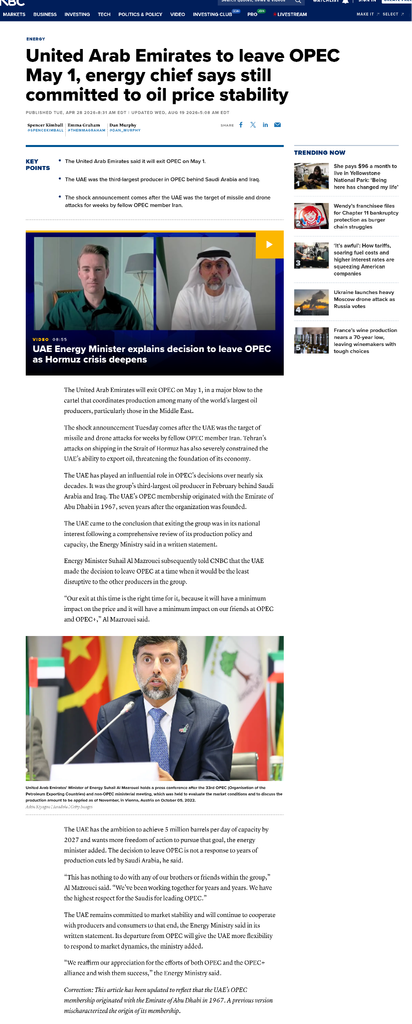
NerdWallet, a finance app, offers a good example of building LLM brand trust. By publishing well-structured, deeply researched content about credit cards, loans, mortgages, and other financial products, plus amassing numerous external citations on review sites, news platforms, and social media apps, and running an active YouTube channel with over 300,000 subscribers, NerdWallet has become one of the most cited brands by LLMs responding to finance-related questions.
Despite AI Overviews reducing many personal finance sites’ traffic, NerdWallet has remained dominant in the personal finance niche both in traditional search results and AI Overviews.
Updating content and working with Google Search Console
Regular content updates are essential to an AI answer SEO strategy. LLMs prioritise freshly updated content, so you need to frequently adjust things to stay relevant, not “set and forget.” An article may get significant AI citations initially but drop over time because of a lack of updates.
Google’s free Search Console tool makes it easy to find outdated content that needs to be worked on. Because outdated content naturally loses visibility over time, open your Google Search Console’s Performance report and note pages where impressions and clicks have significantly reduced over time. It usually means those pages are outdated compared to newer options, so you need to update them to stay ahead.
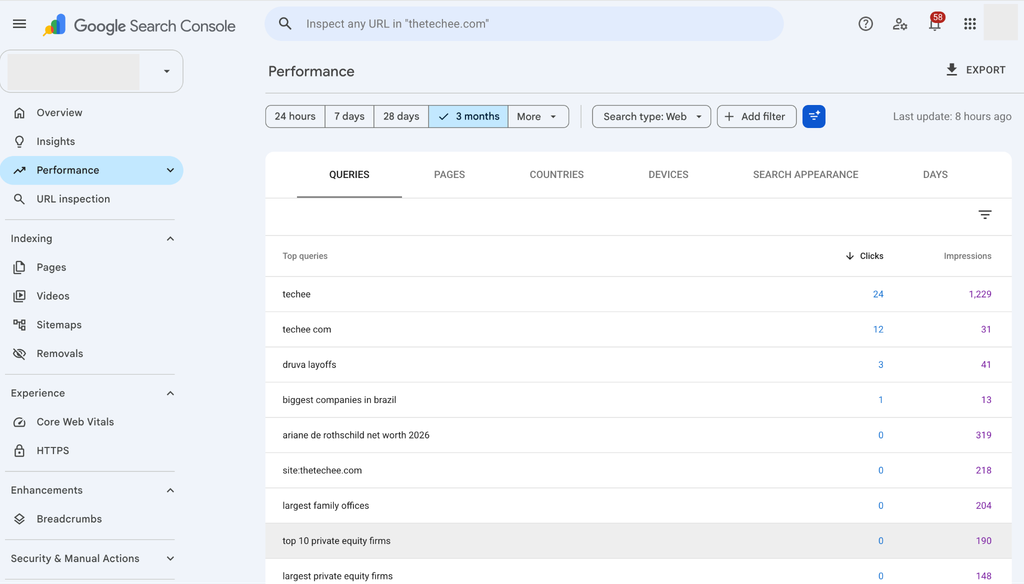
What exactly should you update? You should update on-page content with newer statistics, information, and insights. For example, an article about “The population of each country in the world” needs to be updated annually because populations change each year. You can also update meta titles, descriptions, and image alternative text.
Risks and limitations of AI optimisation
While we recommend optimising for AI citations because they now constitute a major part of search results, this strategy has some limits. AI models can be unpredictable, with outputs changing randomly for every prompt. Models make mistakes and can quote the wrong data from your site, or quote your site verbatim without a deserved citation.
Don’t neglect the human reading experience while optimising for AI citations. Your content is read by people first, not AI bots, so write high-quality, conversational content that your audience will relate to. Fortunately, this also boosts your chances of getting AI citations, so you’re hitting two targets at once.
Conclusion
AI has disrupted SEO and is here to stay, but you don’t have to worry. You can quickly adjust your SEO strategies to focus on AI citations as much as on ranking high in search results pages. This guide has explained the impacts of AI on SEO and how to adjust to this change.
Do you need help in revamping your SEO strategy for the AI era? Look no further than Why SEO Serious to be your trusted partner. With our experience working with companies in diverse niches, we can reorganise your SEO strategy to remain highly relevant in the AI era, so contact us today.
Boost your AI citations
Frequently asked questions
How does AI SEO differ from classic SEO?
Classic SEO centers on getting your website into top search results pages, but AI SEO focuses on getting cited in AI-generated overviews on Google Gemini, ChatGPT, Claude, and other large language models (LLMs).
How can AI tools enhance my SEO strategy?
AI tools make SEO more efficient for individuals and businesses. You can use them to analyse competitors’ strengths and weaknesses, build topic clusters, and generate content outlines and ideas. These tools help you achieve higher search engine and LLM citations.
How do I automate my AI SEO strategy?
You can automate several SEO efforts with AI tools, like researching relevant keywords, generating content ideas, simulating user intent to create corresponding content, and auditing your website for technical flaws.
Are there courses on AI SEO strategy?
Yes, numerous online courses teach effective AI SEO strategies. You can take some free courses like “AI SEO: Mastering Generative Engine Optimisation (GEO)” on Coursera and AI Visibility Essentials on Semrush Academy.